What Are the 7 Steps of a Sales Call? Make Discovery Measurable
Table of contents
- What are the 7 steps of a sales call?
- Why the seven steps break down in complex B2B calls
- Turn the seven stages into enforceable discovery milestones
- Define acceptable qualification evidence
- Build the inspection workflow: detect, review, coach, and act
- The scorecard: measure adherence without rewarding scripted calls
- A 30-day rollout for sales leaders and RevOps
- When a seven-step model is not enough
- Make every call inspectable, not just the calls managers happen to review
The seven commonly taught steps are prospecting, preparation, approach, presentation, objection handling, closing, and follow-up. That sequence becomes useful for forecast inspection only after leaders define what evidence reps must produce, how unresolved objections are recorded, and who owns each commitment.
A CRM stage is not proof of discovery. Neither is a polished recap.
What are the 7 steps of a sales call?
There is no single model used by every organization, but a common sequence covers these seven stages:
- Prospecting: Identify an account or contact with a plausible reason to engage.
- Preparation: Research the account, set the call objective, and decide which information the conversation needs to establish.
- Approach: Open the conversation, align on the agenda, and gain permission to explore the buyer's situation.
- Presentation: Connect the buyer's stated problem to a relevant capability, outcome, or commercial case.
- Objection handling: Identify the concern, respond to it, and confirm whether the buyer considers it resolved.
- Closing: Agree on a concrete next step when the deal should continue, or disqualify it when it should not.
- Follow-up: Complete the commitments made during the call and keep the agreed process moving.
Teams may rename, combine, or repeat these stages. A complex B2B discovery process can span several calls, with different stakeholders supplying different pieces of evidence.
The labels describe a process. They do not show whether the rep asked about timing, received a usable budget range, identified the decision-maker, or secured a next meeting with an owner and due date.
A manager cannot forecast from a stage label when the buyer evidence needed to justify that stage was never asked, answered, or confirmed.
Why the seven steps break down in complex B2B calls
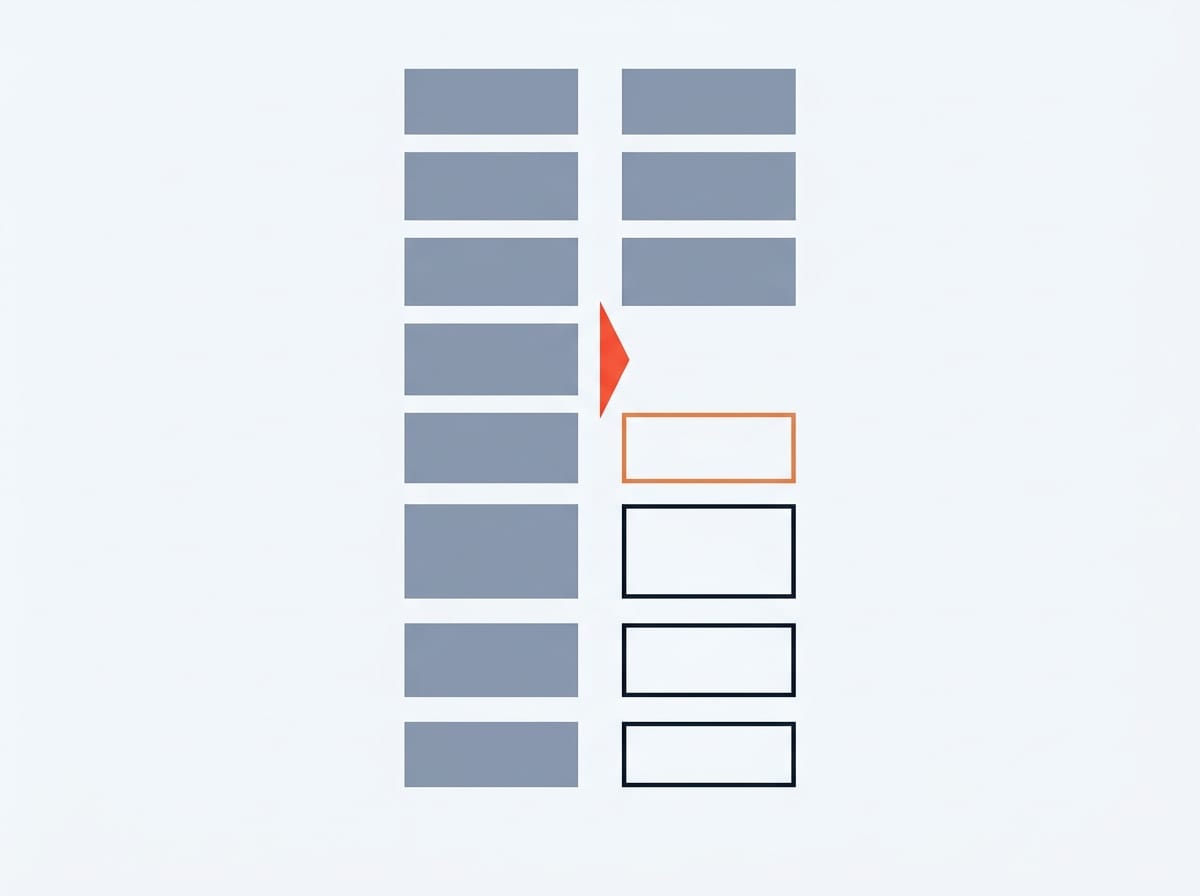
A rep can deliver a clean opening, ask several broad questions, and give a confident presentation while missing the facts that determine whether the deal is real.
Consider a buyer who likes the product but cannot start implementation until the next fiscal year. If the rep never asks about timing, the call can sound positive while the forecast remains unsupported.
Manual review does not solve this at team scale. Managers have limited listening time, so they sample calls. The sample is rarely representative, and review often starts only after a deal has become risky. That is quarterly coaching roulette applied to pipeline inspection.
One overall call score creates another problem. Strong communication can hide weak commercial discovery. The rep may listen well and explain the product clearly, yet leave a price objection unresolved and end with, 'Let's reconnect soon.'
Call handling and deal impact need separate assessments. One measures communication, listening, objection handling, and commercial execution. The other asks whether the conversation improved the customer outcome, resolved a concern, reduced churn risk, or moved the deal forward.
An imperfectly delivered call can still uncover that the budget has been frozen. A polished call can produce no usable qualification evidence at all. Managers need to see both.
Turn the seven stages into enforceable discovery milestones
For each stage, define three things before selecting a metric or system: the expected question or behavior, the evidence that counts, and the response when that evidence is missing or unresolved.
Your discovery methodology controls the details. MEDDIC, SPICED, and custom models use different criteria, so the standard should reflect your sales motion rather than a generic checklist.
| Stage | Evidence to detect | Failure signal | Operational response |
|---|---|---|---|
| Prospecting | A documented reason the account fits the target motion and a hypothesis worth testing. | Account selection is based only on list membership or contact availability. | Review targeting or qualify out before more rep time is spent. |
| Preparation | A clear call objective and the stage-relevant facts the rep needs to test. | Research is treated as if the buyer confirmed the problem. | Coach the distinction between an account hypothesis and buyer evidence. |
| Approach | The buyer agrees to the agenda and gives permission to explore the situation. | The rep moves from rapport directly into a product tour. | Coach the opening and inspect whether later discovery was constrained. |
| Presentation | The rep connects a buyer-stated problem to a relevant value narrative. | Features are presented without a confirmed problem, impact, or priority. | Coach the link between discovery evidence and presentation content. |
| Objection handling | The concern is classified, addressed, and checked for resolution. | A price, competition, feature, timing, or trust objection is recorded only as generic negativity. | Coach the response or assign a deal action when the concern remains open. |
| Closing | The next step has a specific action, owner, and due date. | The call ends with a vague promise to reconnect or send information. | Require clarification, assign follow-up, or reassess deal status. |
| Follow-up | Call commitments become assigned work and are completed by the agreed date. | Tasks remain inside a transcript, recap, or rep's private notes. | Assign ownership and inspect due-today and overdue work. |
Define acceptable qualification evidence
Budget, timeline, and decision-maker are common checkpoints, but they are not sufficient for every motion. Choose the sales discovery milestones that materially affect qualification and forecast review, then define the value format that makes each one usable.
| Check | What good looks like |
|---|---|
| Budget | The buyer confirms an available amount, range, funding status, approval path, or a clear reason the value cannot yet be known. 'Budget discussed' is too vague. |
| Timeline | The buyer provides a target date, decision window, implementation constraint, or event driving urgency. 'This quarter' counts only if that precision fits the team's standard. |
| Decision-maker | The call identifies the person or group with approval authority, their role in the process, and any access gap the rep must address. |
Each checkpoint also needs stage applicability. Do not penalize an outbound rep for failing to confirm a detailed procurement process during an introductory call if the methodology places that question later.
Record how the evidence appeared. Information the rep asked for and the buyer answered is different from information the buyer volunteered. Both differ from a rep inference or a missing value.
Build the inspection workflow: detect, review, coach, and act
Start with a MEDDIC, SPICED, or custom template, then tune the criteria and weights to the actual sales motion. A template is a starting point, not the operating standard.
- Detect the evidence: Configure a cross-call question library and business checkpoints for the required discovery facts. Capture available values, not just whether a topic was mentioned.
- Review coverage in context: Compare checkpoint status by rep, team, account, and relevant sales stage. Separate asked-and-answered evidence, buyer-volunteered information, vague values, and missing information.
- Validate consequential findings: Use timestamped key moments to inspect the source conversation quickly. AI detection can be wrong, so managers should check the recording before changing a forecast, escalating a deal, or judging rep performance.
- Inspect objections: Review price, competition, feature, timing, and trust objections by occurrence, handling quality, and resolution status. Phrase patterns, objection-handling examples, and rep benchmarks can show whether the gap is weak discovery, a poor response, or failure to confirm resolution.
- Coach the pattern: Use call-handling dimensions alongside an independent outcome measure. A sales coaching call should focus on the repeated behavior that created risk, not replay every minute of one conversation.
- Assign the work: Turn commitments and unresolved gaps into tasks with owners and due dates. Due-today and overdue views make the follow-up stage inspectable.
A practical starting rhythm is a weekly review. RevOps audits definitions, exceptions, and detection errors. Frontline managers coach the repeated patterns creating the most risk. Leadership reviews recurring checkpoint gaps, unresolved objections, and account-level follow-up. Teams should change that cadence when their volume and sales cycle require something different.
Contexro is one way to run this workflow. Its Conversation Intelligence detects company-configurable checkpoints and captures values across tracked calls, classifies typed objections with handling quality and resolution status, and links timestamped key moments to the recording. Agent Score assesses communication, listening, objection handling, and commercial execution, while Business Score keeps deal impact and customer outcome separate from rep polish. Commitments can become Work Items with owners and due dates, and reps receive 2-3 specific, actionable tips after every analyzed call in their dashboard and by email.
The scorecard: measure adherence without rewarding scripted calls
A sales call scorecard should expose evidence gaps without pushing reps to recite the same questions in the same order. Measure whether the milestone was established, how reliable the evidence is, and what still needs action.
| Measure | Definition |
|---|---|
| Milestone coverage | The share of relevant calls where a required checkpoint was surfaced and captured with a usable value. |
| Evidence quality | Whether the value was buyer-confirmed, buyer-volunteered, inferred, vague, or missing under the team's defined standard. |
| Objection execution | Objection occurrence by type, handling-quality patterns, and unresolved concerns that require another action. |
| Follow-up reliability | Whether commitments became assigned tasks with due dates, and whether that work is open, due today, completed, or overdue. |
| Call handling | Communication, listening, objection handling, and commercial execution, scored separately so managers can coach the specific behavior. |
| Deal impact | An independent assessment of customer outcome, resolution effectiveness, churn risk, or deal progress. |
Talk/listen ratio, silence, longest monologue, and sentiment trend can help diagnose a call. They should not become universal pass/fail rules. A technical discovery call and an executive presentation will naturally have different interaction patterns.
Segment results by role, stage, rep, team, and account where those cuts affect interpretation. A single team average can hide a severe commercial-execution gap inside strong communication scores.
Set targets from the team's baseline and sales motion. Define which calls are relevant before calculating coverage, and preserve versioned scoring history when changing criteria or weights. Otherwise, an apparent improvement may reflect a new definition rather than changed rep behavior.
A 30-day rollout for sales leaders and RevOps
This is an illustrative rollout plan, not a guaranteed deployment timeline. Confirm ownership across RevOps, sales leadership, frontline management, privacy or security review, and rep enablement before starting.
- Days 1-7, define the evidence: Select the few checkpoints that materially affect qualification and forecast review. For each one, document the expected question or behavior, acceptable value, applicable call stages, and escalation action.
- Days 8-14, configure and test: Build the scorecard, checkpoint detection, and objection categories. Test them against a representative call set that includes different reps, stages, outcomes, and conversation types.
- Days 15-21, calibrate managers: Review the same timestamped examples together. Correct ambiguous criteria and agree on which findings trigger sales call coaching, deal intervention, qualification changes, or no action.
- Days 22-30, launch inspection: Release the relevant team views and manager digests. Require an owner and due date for follow-up commitments, then review initial checkpoint coverage and unresolved-objection patterns.
Protect rep adoption by keeping feedback specific and timely. Prioritize two or three improvements after a call instead of sending a generic quarterly assessment. If automated feedback is used, verify that reps can inspect the source evidence and that delivery respects the organization's working-hour and privacy policies.
After the first month, change one definition or weight at a time. Preserve scoring history so leaders can separate real behavior change from measurement change.
When a seven-step model is not enough
Enterprise and multi-threaded deals need account-level evidence. One conversation may reveal the timeline, another may expose procurement requirements, and a third may identify the economic buyer. Inspect the evidence across the account instead of demanding that one call establish every qualification fact.
Inbound, outbound, renewal, support, and customer-success conversations also require different criteria. Use separate scorecards where the purpose and expected outcome differ. A new-business discovery standard does not belong on a support escalation.
If a milestone is consistently absent, inspect the design before blaming the reps. The question may be assigned to the wrong stage, the acceptable evidence may be unclear, or the checkpoint may not fit that conversation type.
The target is not a perfect script or full completion on every call. It is reliable evidence for coaching, deal inspection, and customer follow-through.
Make every call inspectable, not just the calls managers happen to review
Define the evidence. Detect it consistently. Validate important findings in context. Coach repeated gaps, then assign the follow-up with an owner and due date.
Conversation intelligence provides the execution layer that makes a sales methodology observable across the full set of tracked calls. It replaces unread transcripts and manager sampling with reviewable discovery evidence, objection status, and accountable work.
For a deeper look at scorecard design, read Your sales call scorecard is averaging away the thing you need to see.