Your sales call scorecard is averaging away the thing you need to see
A single score hides the coaching decision. Separate rep technique from customer outcome, then coach the gap between them.
A polished call that leaves the buyer stuck needs better judgment. A rough call that solves the buyer's problem needs cleaner execution without removing the behavior that worked.
Why the score stopped changing anything
Your sales call scorecard says the rep earned a 7 out of 10. The manager can defend it. The rep can accept it. Neither knows what to do differently on the next call.
Adding more call scoring criteria or replacing the sales call review template does not fix the design. New criteria and weights still force two different questions into one average.
Consider a rep who handles a price objection cleanly, summarizes the buyer's position, and confirms a next step. The technique looks strong. But the buyer's real concern was implementation risk, and the rep never addressed it.
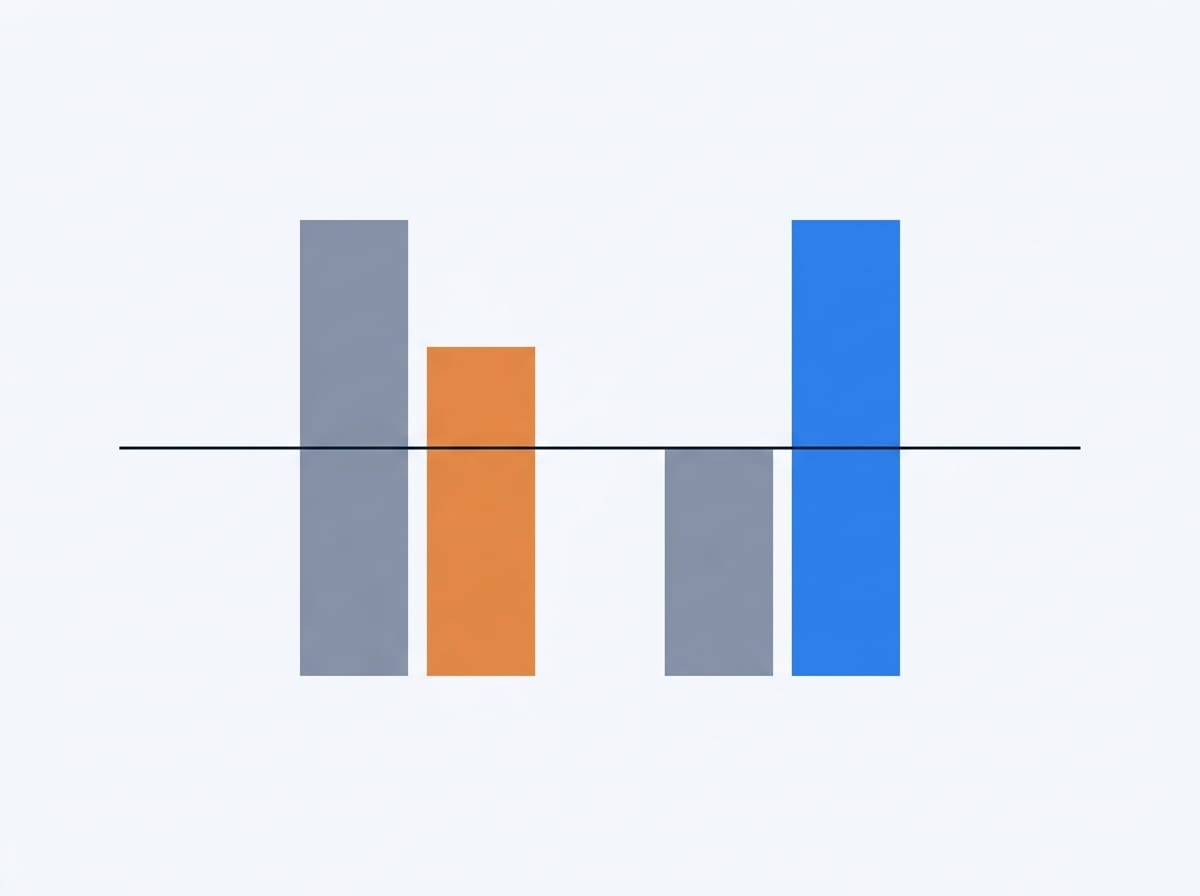
On an illustrative 10-point scale, that call could earn a 9 out of 10 for technique and a 4 out of 10 for customer outcome. The composite lands somewhere in the middle and removes the reason those scores diverged.
The reverse happens too. A rep runs a messy demo, interrupts the buyer, and loses control of the agenda. Then the rep identifies the integration blocker, brings in the right technical owner, and gives the buyer a credible path forward. Weak technique. Useful outcome.
If two calls need opposite coaching, any score that makes them look the same is measuring the wrong thing.
Two questions, not one number
Build the scorecard around two independent columns. Score each one before any roll-up appears on a dashboard.
| Design choice | Technique column | Outcome column |
|---|---|---|
| Question | Did the rep do the job this call stage requires? | Did the customer leave better off than they arrived? |
| Evidence | Communication, listening, discovery, objection handling, and commercial execution | A clearer answer, a resolved issue, reduced risk, or a credible agreed next step |
| Primary use | Identify a skill or execution gap | Identify whether the rep chose and solved the right problem |
| Low score means | The rep struggled to execute the required behavior | The customer's concern, decision, or next step remained unresolved |
| Coaching question | Can the rep perform the behavior consistently? | Did the rep apply the right behavior to the right customer need? |
Technique must match the stage. A first discovery call requires a different job from a negotiation or renewal call. Define what the rep is responsible for in that moment, then score the observed behavior.
Outcome is not the same as winning the deal. A discovery call can produce a good outcome because the buyer has a clearer view of fit, risk, budget, or the next decision. A friendly conversation can still produce a poor outcome if nothing gets resolved.
Score the columns independently. Strong technique must not rescue a poor outcome, and a positive outcome must not erase weak execution. If the outcome cannot be observed from the call, mark it as unobserved instead of quietly treating it as average.
Reading the divergence
The pair of scores creates four coaching situations. Read the quadrant before opening the transcript or assigning training.
| Technique | Outcome | What happened | Coaching response |
|---|---|---|---|
| High | High | The rep executed the stage well and the customer made useful progress. | Check whether the behavior is repeatable, then use the call as a stage-specific example. |
| High | Low | The rep followed the process, but the customer's real issue remained unresolved. | Coach judgment, diagnosis, and prioritization. More practice on the same technique will miss the problem. |
| Low | High | The execution was rough, but the rep still solved the problem or created a credible next step. | Protect the decision or product knowledge that worked. Coach the delivery around it. |
| Low | Low | The rep struggled with the required behavior and the customer made little progress. | Coach the foundational skill, then verify that the call-stage process is clear. |
High technique with low outcome is a judgment problem. The rep can handle an objection, ask a discovery question, or summarize the call. They applied that ability to the wrong issue.
Sending the rep back through generic objection training will not help. Review why they treated price as the main concern when the buyer kept returning to implementation time, internal resources, or trust.
Low technique with high outcome deserves protection. The rep may have talked too much or handled the agenda poorly, yet recognized the buyer needed a technical answer and brought in the right person. Coach call control and listening. Keep the decision that solved the customer's problem.
This is why divergence matters. One quadrant calls for better judgment. The other calls for better execution. A composite score sends both reps to the same coaching session.
Measure coverage before you score anything
Before debating what counts as high or low, measure whether the team covers the information the stage requires. Coverage is a binary baseline: was the required question addressed, or was it missed?
Start with one call type. For a first discovery call, a practical set of five must-ask questions could look like this:
| Check | What good looks like |
|---|---|
| Problem and urgency | The buyer explains what needs to change and why it matters now. |
| Business impact | The buyer describes what the current problem costs, delays, or puts at risk. |
| Budget path | The call identifies whether funding exists and how approval works. |
| Timeline | The buyer gives a target date and the event driving it. |
| Decision process | The call identifies who participates, who decides, and what must happen before approval. |
These are examples, not universal criteria. Replace them with the five questions your chosen stage requires, then freeze the set for four weeks. Changing the checks midway destroys the baseline.
For every eligible call, mark each question as asked, volunteered by the buyer, missing, or not applicable. Count asked and volunteered information as present, but retain the source. A rep who repeatedly depends on buyers to volunteer budget or timeline still has a coverage risk.
The calculation stays simple: coverage = present required questions / applicable required questions.
Coverage is cheap to calibrate because the reviewer is locating evidence, not debating whether the call felt consultative. Run it across every eligible call if your tooling permits. If the work is manual, set the sampling rule before reviewing calls so managers cannot choose the easy ones.
Review the misses by question, rep, and week. A team-wide gap may point to an unclear stage definition or manager expectation. An isolated gap gives you a specific coaching target.
After four weeks, add the outcome column. Now you can tell whether low customer outcomes come from missing basic information or from reps collecting the information and making the wrong decision with it.
Where to start
Pick one team and one call stage. Define five required questions, hold them steady for four weeks, and establish coverage before introducing subjective scores.
Next, add customer outcome as a separate column. Keep technique and outcome visible as a pair. If leadership still wants a composite number for reporting, show it only after the two underlying scores and never use it as the starting point for coaching.
Contexro applies this workflow on every call rather than a manager-selected sample. Agent Score evaluates communication, listening, objection handling, and commercial execution. Business Score independently measures customer experience, resolution effectiveness, churn risk, and deal impact. Company-configurable checkpoints can also capture budget, timeline, and decision-maker values, including which questions were missed and whether the prospect volunteered the information.